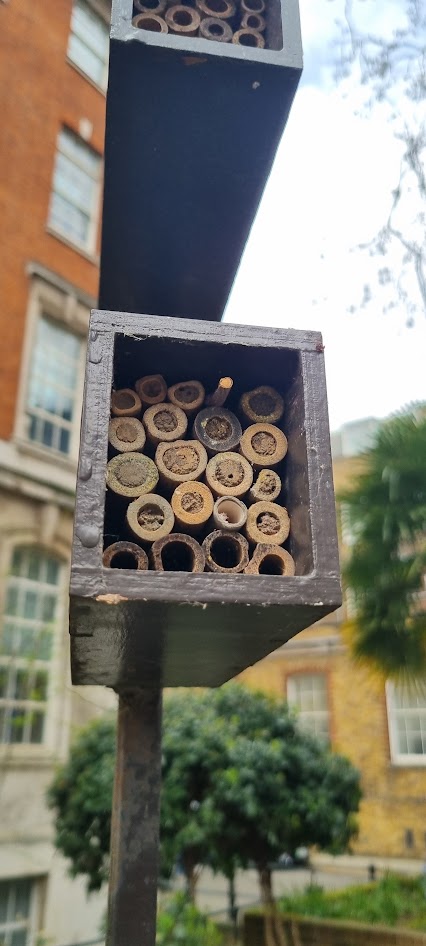
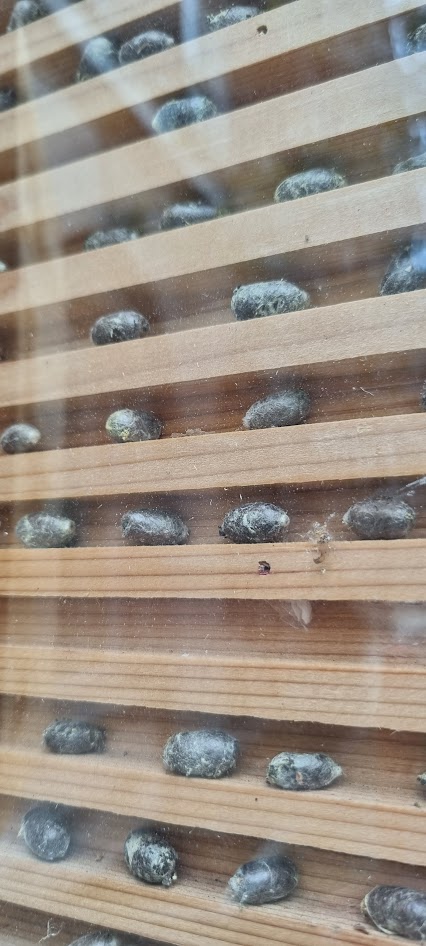
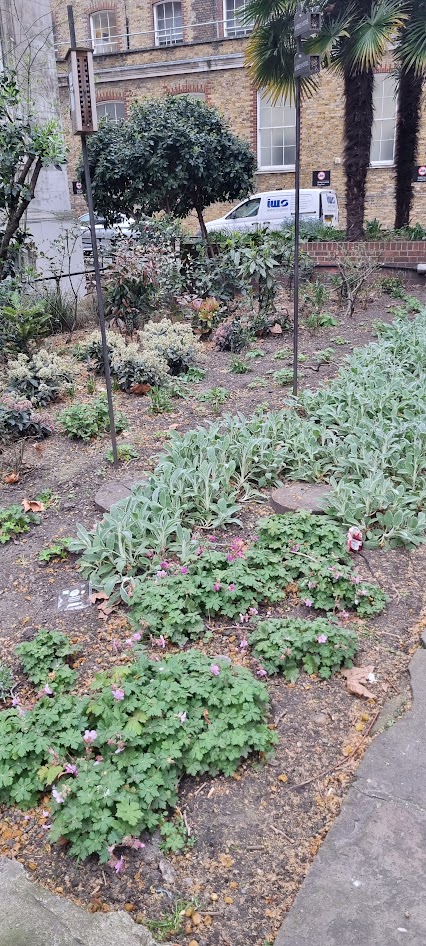
Spring 2026 at Guy’s Memorial Gardening – added Red Mason Bee cocoons following better planting for bees to provide nectar and pollen sources and nesting material
It is now three years since we started working with KCL. Unfortunately, the 3 requirements to provide suitable habit for solitary bees has not been met in that time at most sites.
- Food for bees (a diversity of nectar and pollen sources from February to October) eg. Wallflowers in spring and Salvia in Autumn
- Nesting sites for cavity-nesting solitary bees
- Nesting material for cavity-nesting solitary bees eg. Lamb’s ear for Wool Carder Bees, Roses for Leafcutter bees
Despite putting up suitable bee hotels and bee observation boxes in potentially suitable sites, sufficient nectar and pollen-rich flowers, and flowers grown for nesting material are all still sadly lacking.
The only exception, when we visited in spring 2026 appeared to be Guy’s Memorial Garden and the Science Gallery courtyard where Lamb’s ear, Hardy geraniums (Cranesbill) and Skimmia had been planted. As a result, we decided to introduce Red mason bee cocoons here for educational purposes.
At Great Dover Street Apartments, a leafcutter bee had made a nest. We had overwintered the cocoons and returned them to the bee hotel.
There was no sign of any bee nesting activity at any of the other sites (Denmark Hill, Stamford Street Appts, Honor Oak, other sites at Guy’s including the Waste Garden whose wild flowers bloom too late to feed spring-flying Red Mason bees) mainly due to the reasons below.
Why?
- Lack of water – even the most drought-tolerant plants (apart from sedum, agapanthus and kniphofia) require some water, even Mediterranean plants. Urban Bees spent the summer 2025 visiting each site with nesting boxes to assess installing a timed, irrigation system attached to an outside tap to drip feed a few minutes of water each night during the summer. Unfortunately, water regulations prevented this approach. The alternative was to rely on the garden maintenance contractors watering when on site. In all cases this wasn’t going to be enough during a dry spring and a summer drought.
- Lack of co-ordination between Urban Bees and the Green Team contractors. Suggestions for the best plants for bees were passed through a third party to the Green Team. Our most successful projects where solitary bees thrive is where Urban Bees creates its own habitat for bees, or works very closely with existing gardeners.
- Lack of spring-flowering forage – As a result, Urban Bees secured a small budget to plant spring bulbs and perennials in autumn 2025 in gaps where the Green Team hadn’t planted. But a dry spring prevented these flowers from flourishing and feeding bees. And some were removed by the Green Team, who it appeared hadn’t been informed about our work. We also planted a Crab apple tree at Honor Oak playing fields.
Summer 2026 – no budget was allocated for Urban Bees to conduct educational bee safaris or workshops or staff or students. This was unfortunate as the Red mason bees in the bee observation boxes would have provided a window into the world of relatively unknown solitary bees.
Autumn 2026 – some success with bee hotels in Science Gallery courtyard and Memorial Gardens.
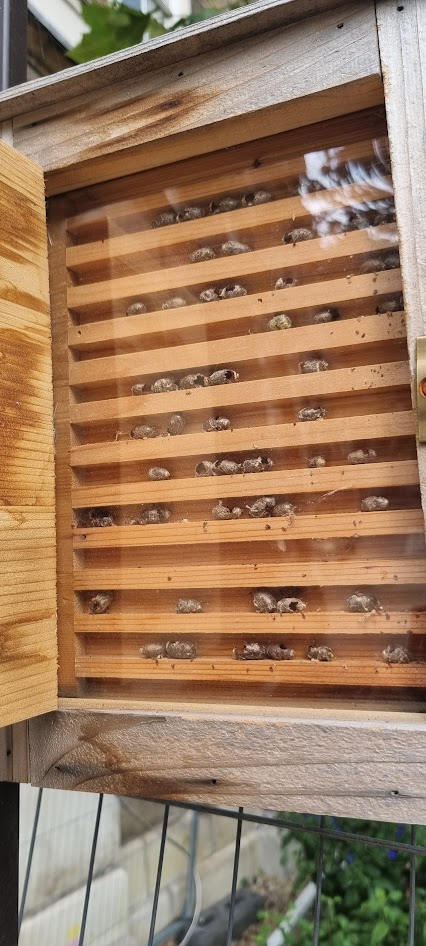
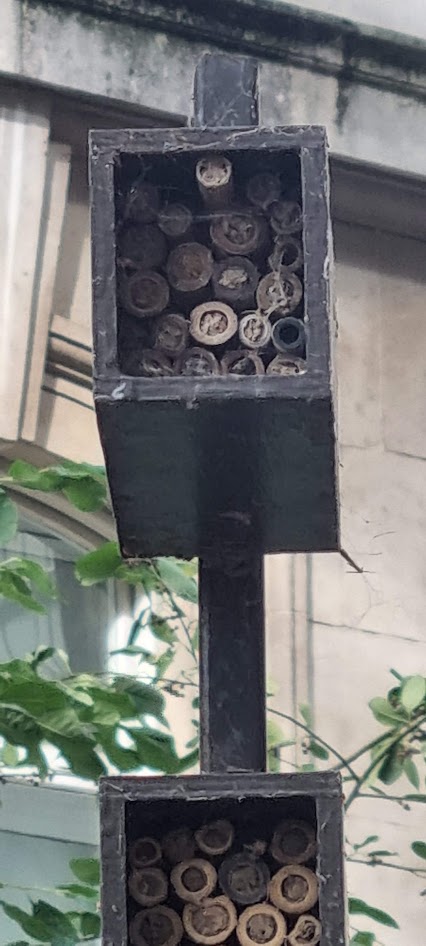
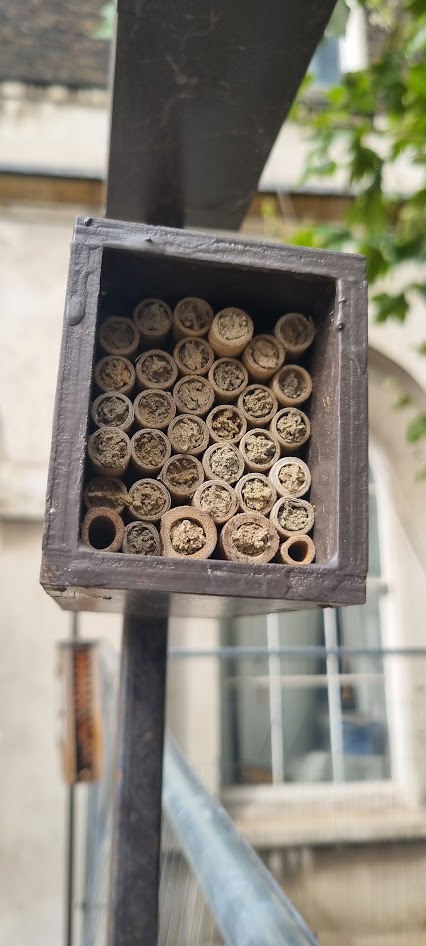
Autumn 2026 – Cocoons placed in the observation boxes hatched open, adult Red mason bees will have emerged during spring and mated. Females have checked into the empty tubes in the bee hotels and laid their eggs, provisioned them with pollen and sealed them with soil.
Next steps A new KCL Biodiversity Action Plan and Sustainability Strategy is being drawn up. Urban Bees met with KCL’s Sustainability Project Manager to discuss actions and potential opportunities to collaborate. Our hope is that we can further improve habitat for wild bees on the KCL estate, and engage staff, students and the community in learning bout the importance of wild bees and how to help them through bee safaris and workshops.