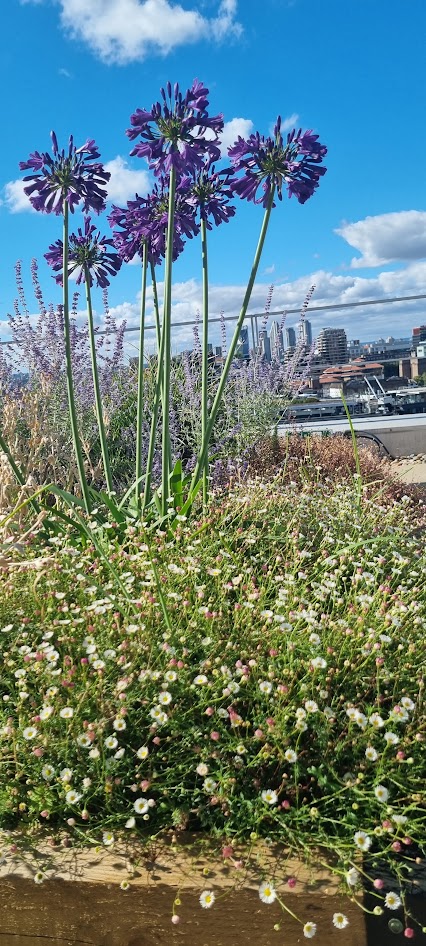
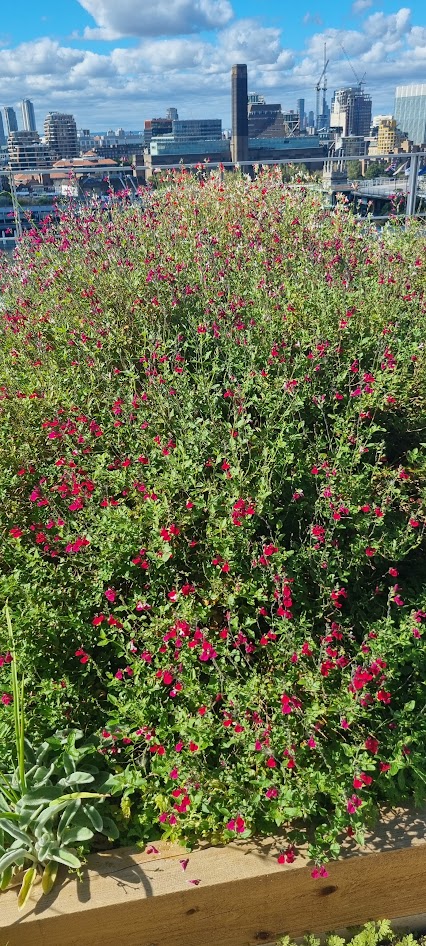
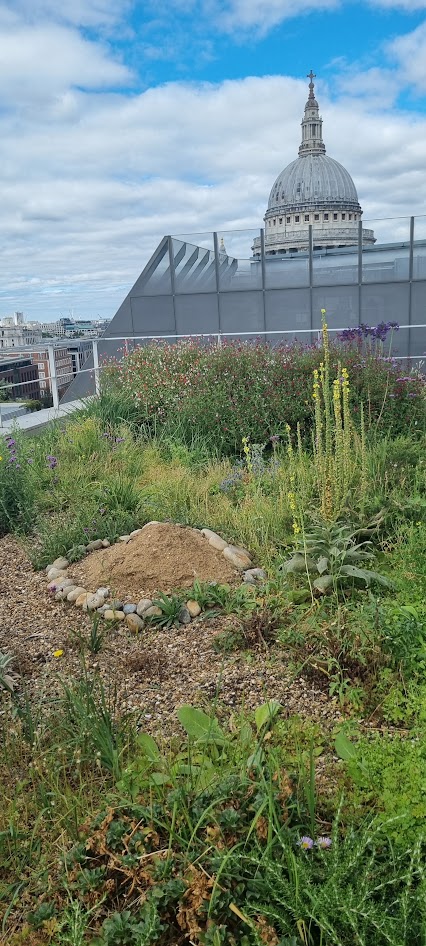
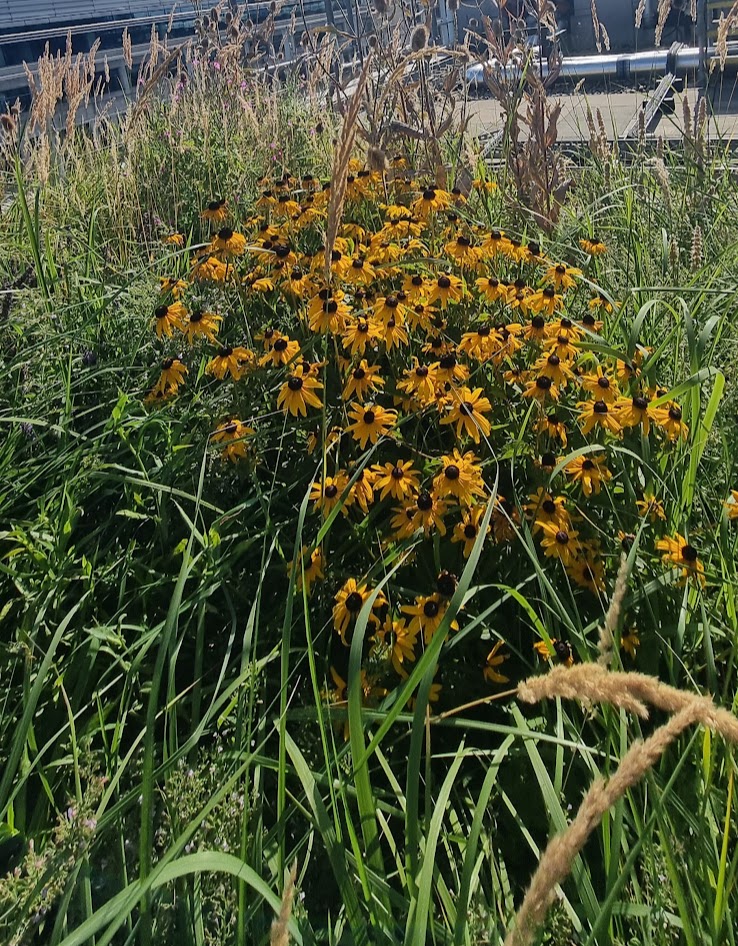
Three heatwaves in and the south facing planter on Bow Bells House in the City is looking magnificent on 27 July 2026 (above) thanks to a drip hose irrigation system that provides 10 minutes of water every 12 hours. (A hosepipe ban was introduced on 23 July, but does not apply to a drip hose system). And most importantly the rooftop flowers were buzzing with wild bees, and honeybees.
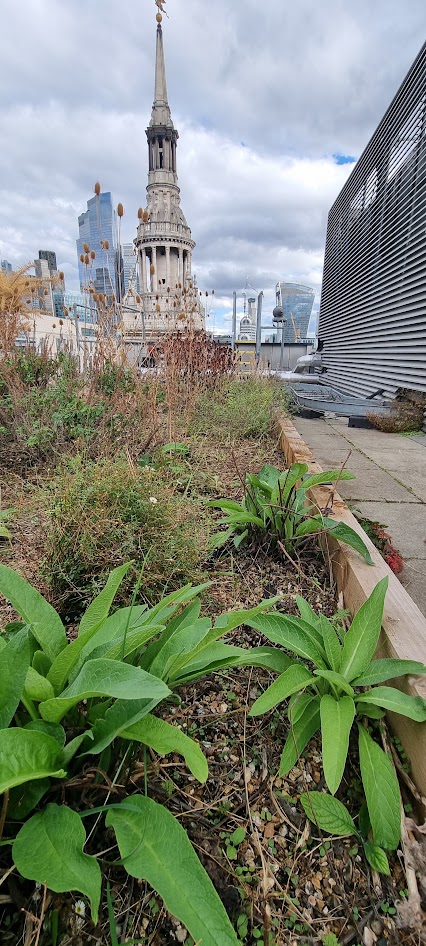
BELOW: 5 weeks later, on 2 September – another 2 heatwaves in August. I’d not been up to the roof as it was too hot, I’d been away and I assumed the irrigation system was working…. LESSON 1 NEVER ASSUME ANYTHING.
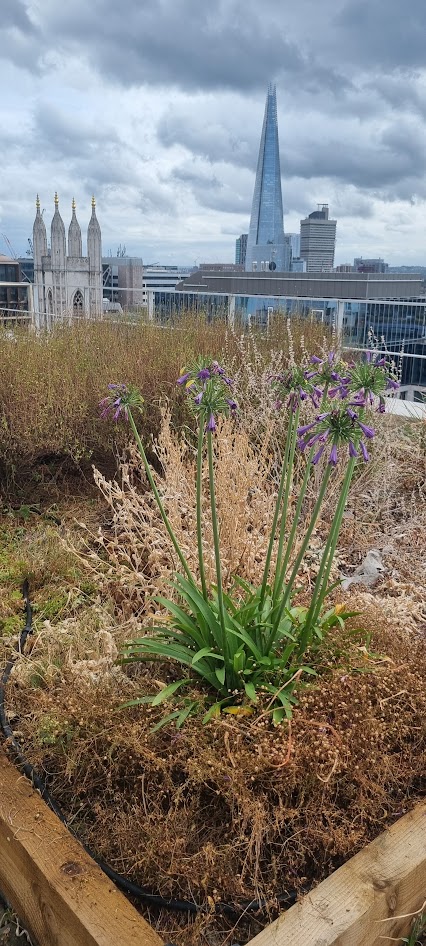
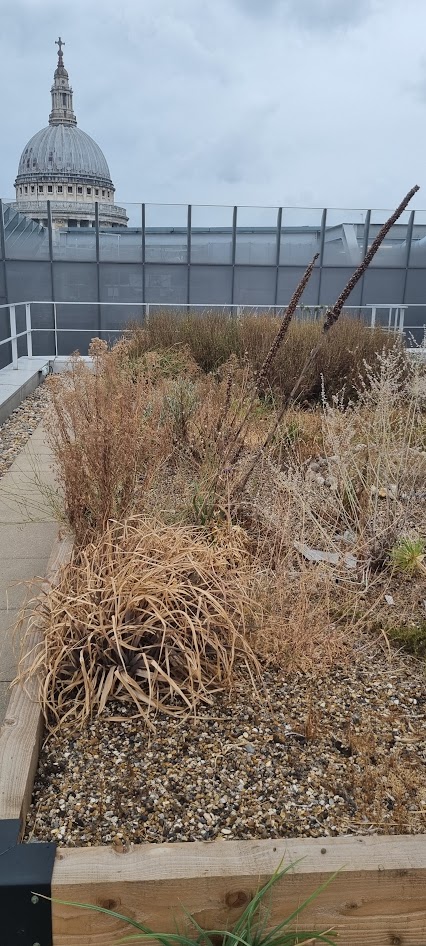
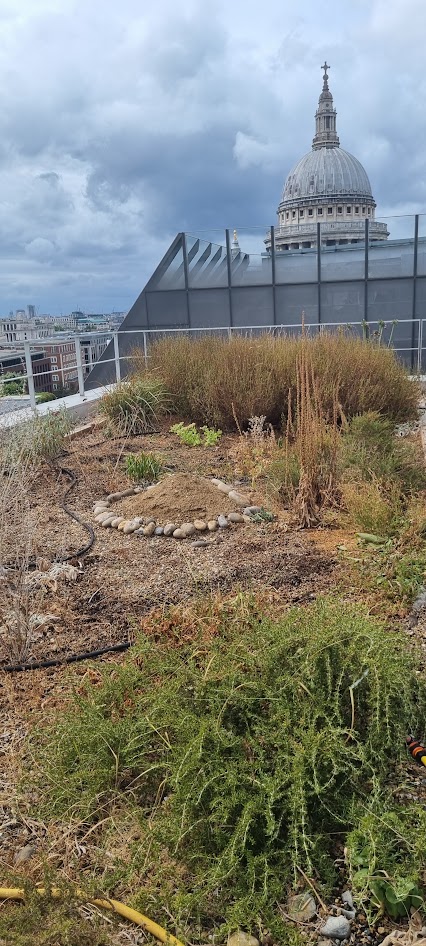
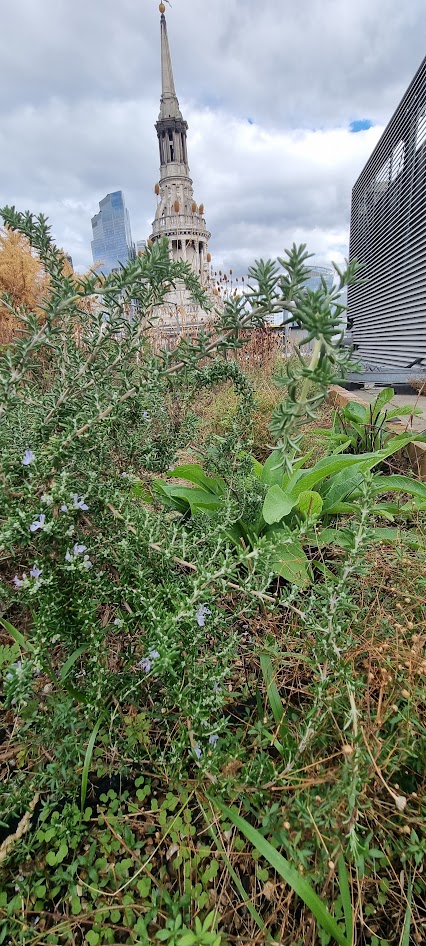
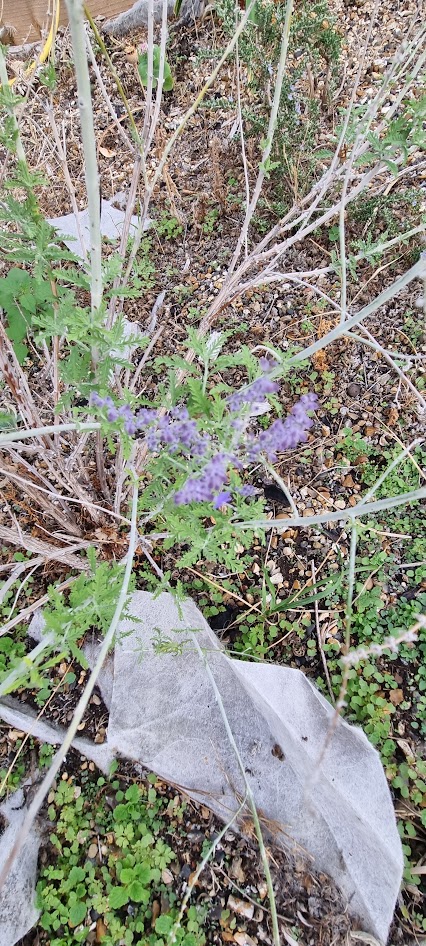
Most of the plants looked dead apart from the Agapanthus, Rosemary and Sedum. The salvia and Russian sage (Perovskia) had stopped flowering so there were no bees on the roof.
You can imagine my shock and dismay. LESSON TWO; WHEN A HOSEPIPE BAN IS ANNOUNCED, INFORM CLIENTS THAT THE DRIP HOSE IS EXEMPT. (AND VISIT THE ROOFTOP TO CHECK THE WATER SYSTEM IS ON).
What had happened? – someone had switched off the valve on the hosepipe (below left) – probably because of the ban, although we’ve never got to the bottom of it. So the timed irrigation system was still switched on at the tap, but the water couldn’t get through the hosepipe to drip onto the planter.
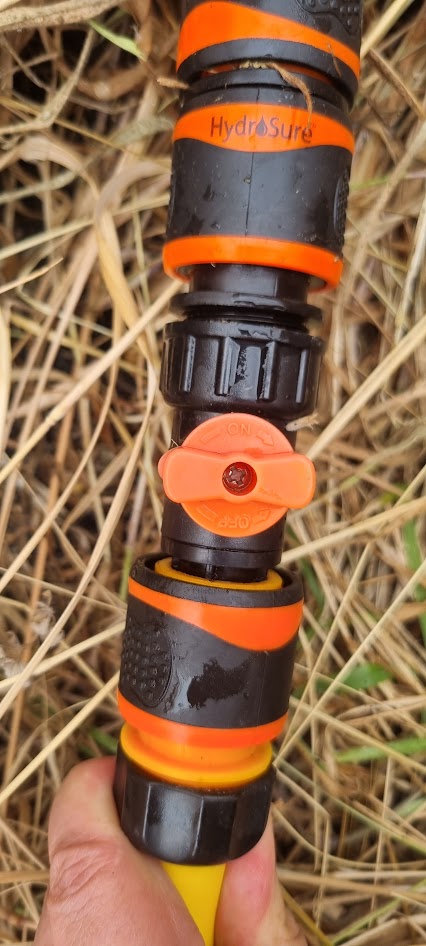
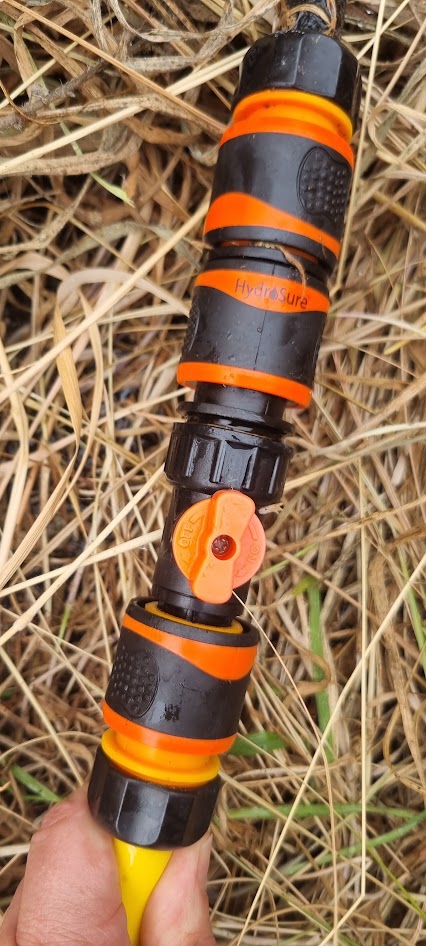
So I switched on the valves on the hoses, spent three weeks in September (one/two days a week) cutting back dead material, planted a few new plants in the south planter to fill some gaps and moved the hose around to try to get water to the plants that really needed it most. LESSON THREE: PLANTS ARE INCREDIBLY RESILIENT. Given water, space, light and sun many will bounce back.
September 23 – 3 weeks later, after more hot, dry weather.
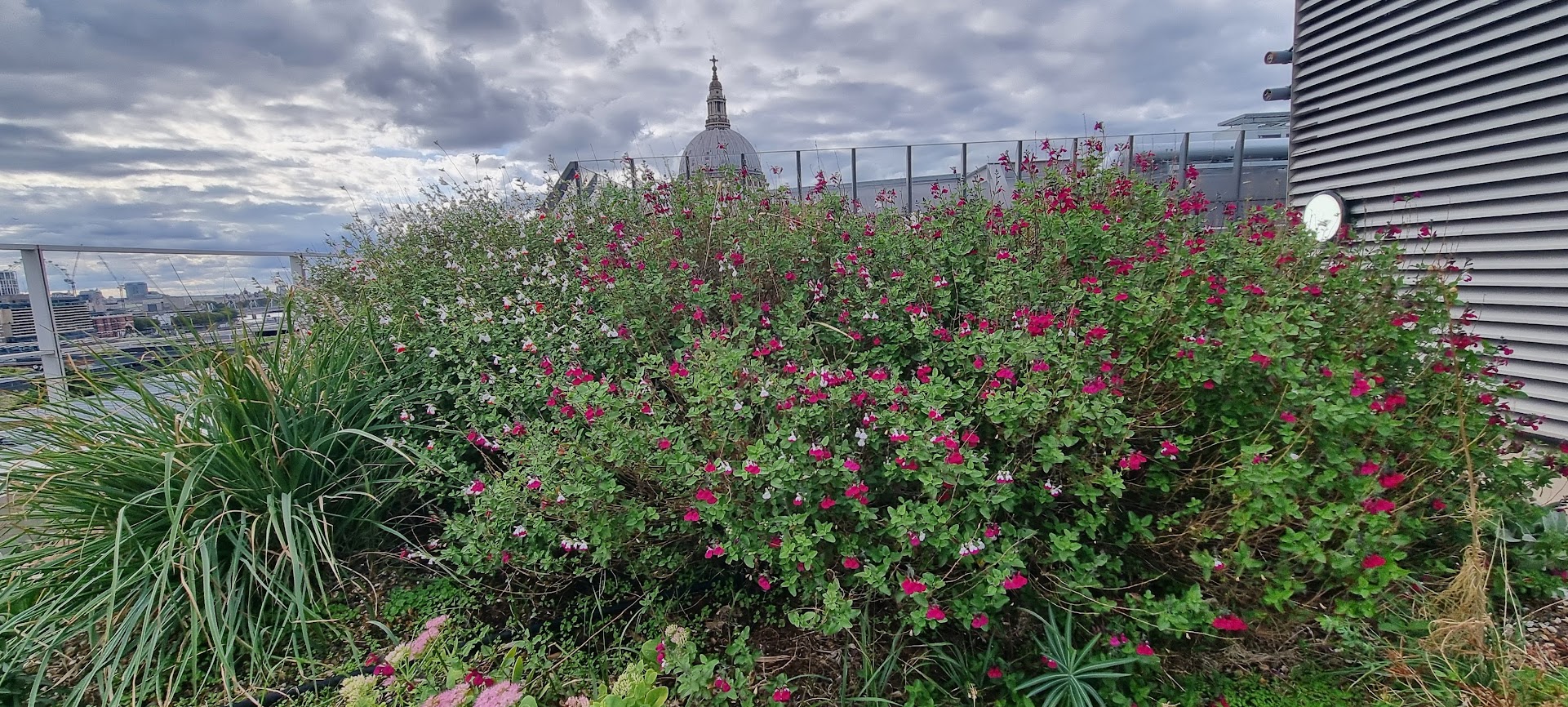
Salvia hot lips is magnificent and being nectar robbed by Buff-tailed bumblebees and honeybees.
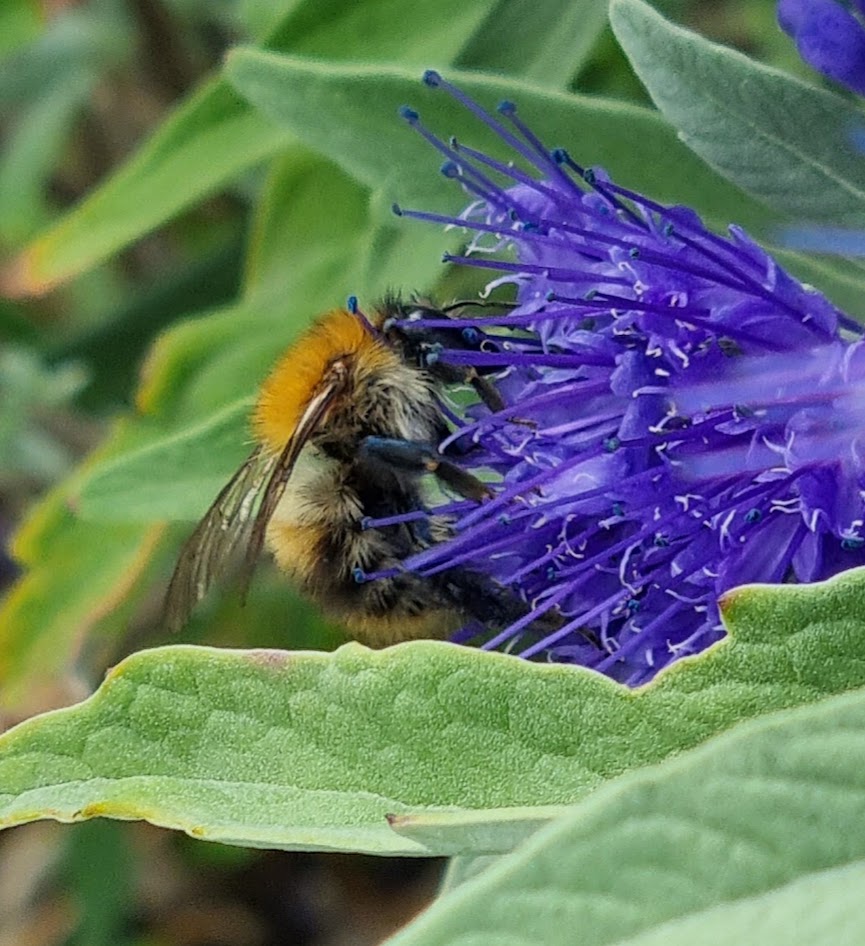
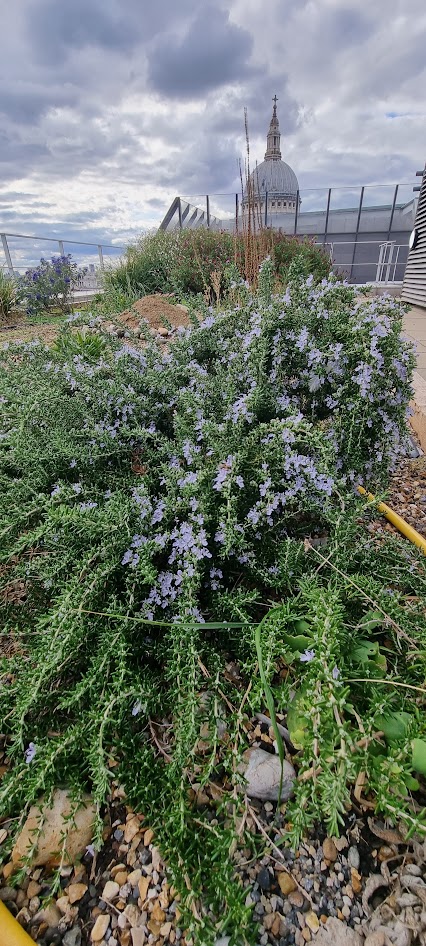
Caryopteris has never looked better and Common carder bees are loving it. The Perovskia is flowering a little, and the Rosemary thinks it’s spring and is covered in honeybees.
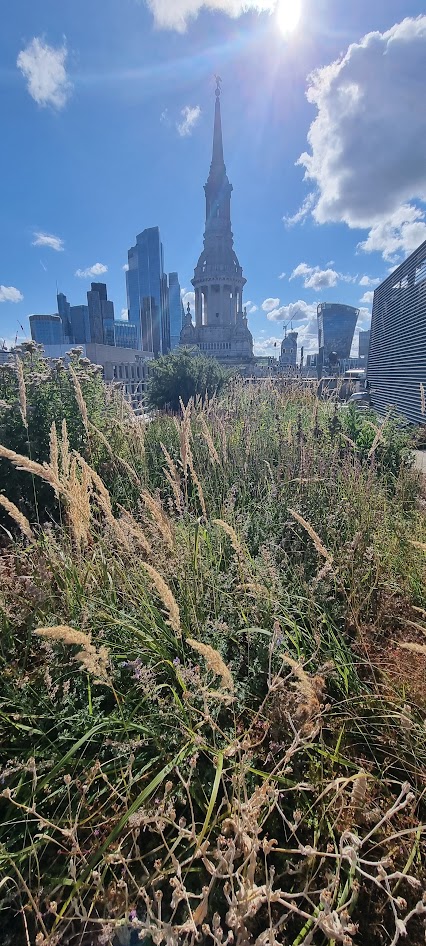
It was a similar story on the North planter, although by the end of July most of the plants had already flowered and grasses were starting to dominate so it wasn’t looking its best, but the Rudbeckia, Eupatorium, Lesser catmint and Oregano was still flowering and attracting bees and hoverflies. The garden looked very much alive, overgrown and humming with life on 27 July (below).
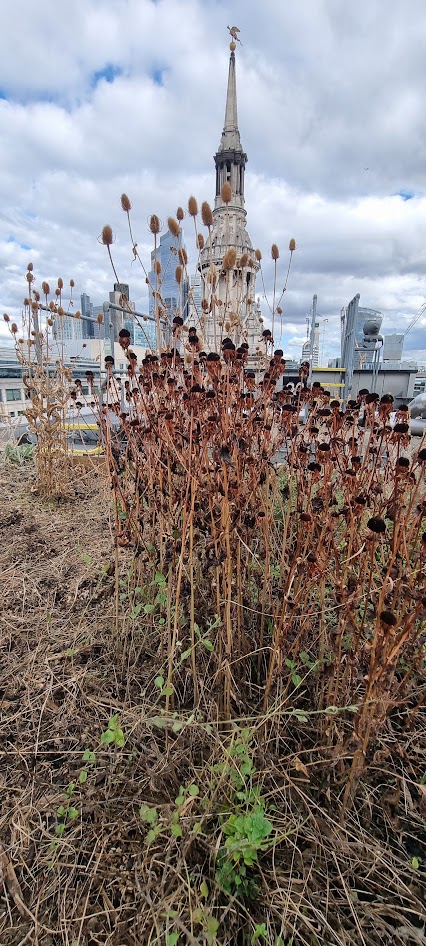
5 weeks later without water on 2 September (below) it looks like a dead, winter garden. No green to be seen.
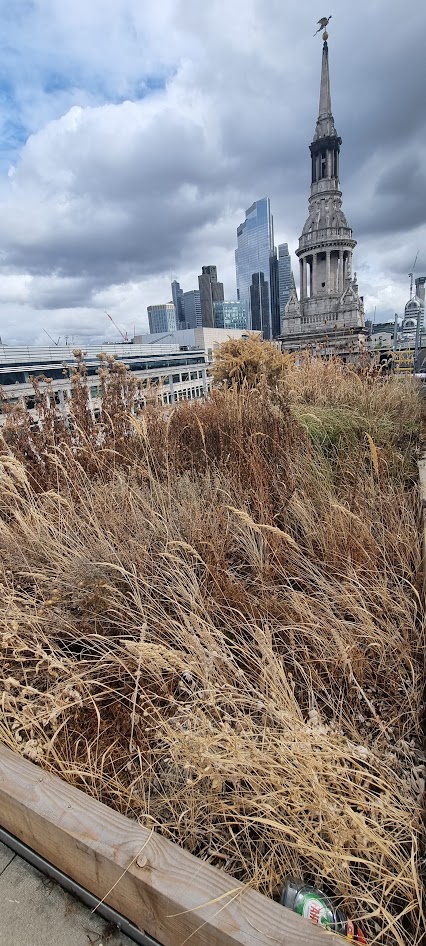
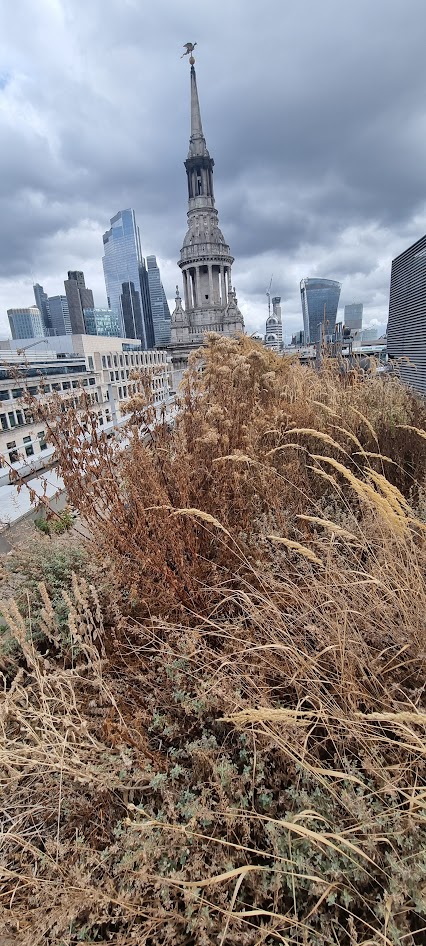
23 September 2026 – 3 weeks later
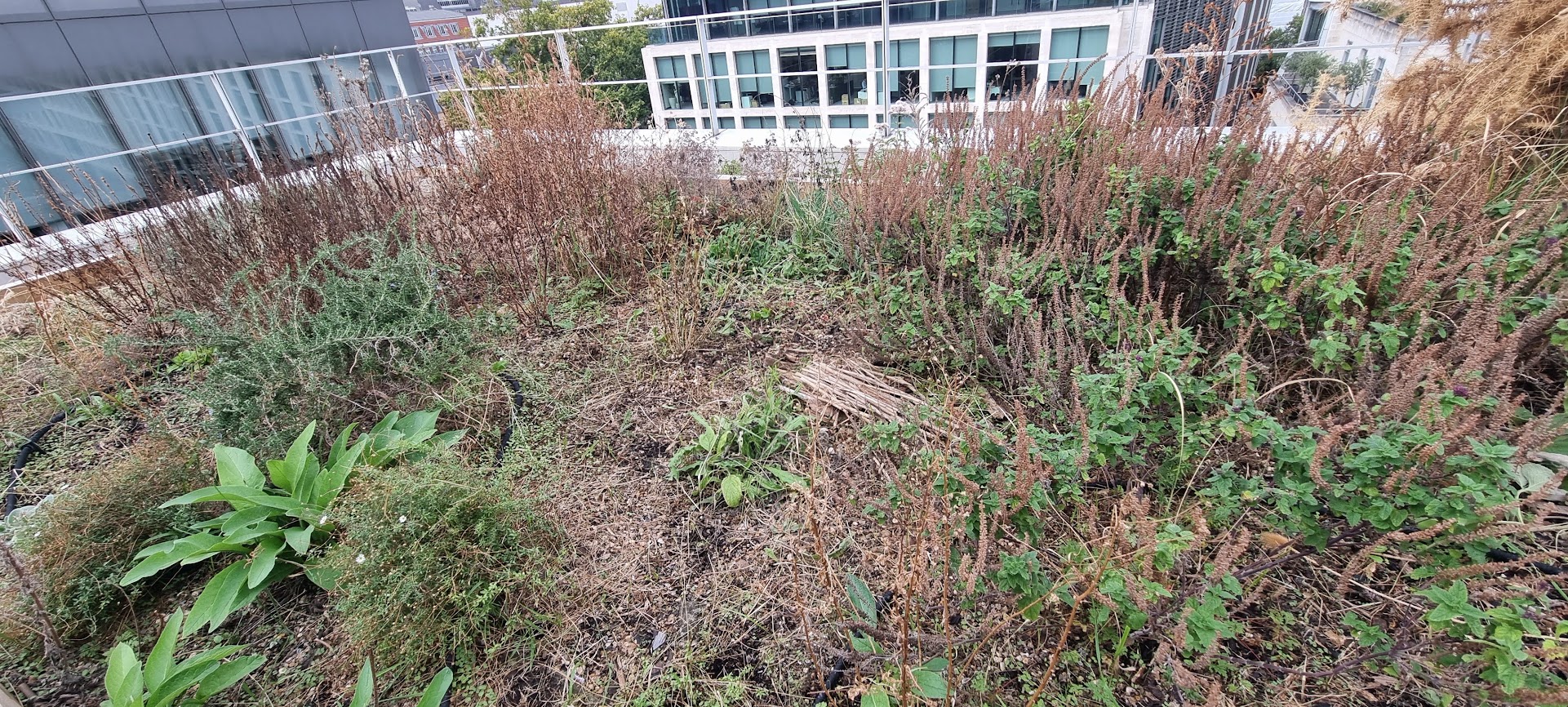
Once all the grass had been removed, living plants were revealed underneath including Nepeta, Comfrey, Rosemary and Teucrium. Plant stems will be left over winter and cut back next spring. Teasel seed heads will provide food for birds over winter.