There are more than 250 wild bee species in the UK. Most do not conform to our idea of a bee. They are not stripy, they do not sting, they do not have a queen, and they don’t live in a hive. Many are tiny, shiny and black and they nest alone in the ground, or in small tubes or cavities.
What all bees share is that they are pollinators of flowering plants. When females collect nectar and pollen to feed their young, they transfer pollen from the male to the female part of the plant, allowing it to set seed.
A flowering herb garden will be pollinated by different bees that fly at different times of the year:
- Hairy-footed flower bees (10-12mm) – brown male and black female pictured above – pollinate Rosemary in spring
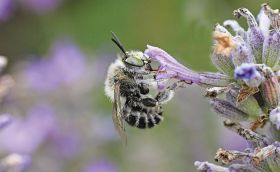
- Four-banded flower bees (7-9mm), with a big green eye, is pictured above on catmint in early summer
- Buff-tailed bumblebees (13 -18mm) on chives in early summer
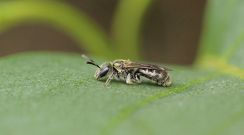
- Green Furrow bees (4-5mm) pictured above pollinates thyme in mid summer
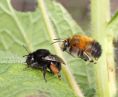
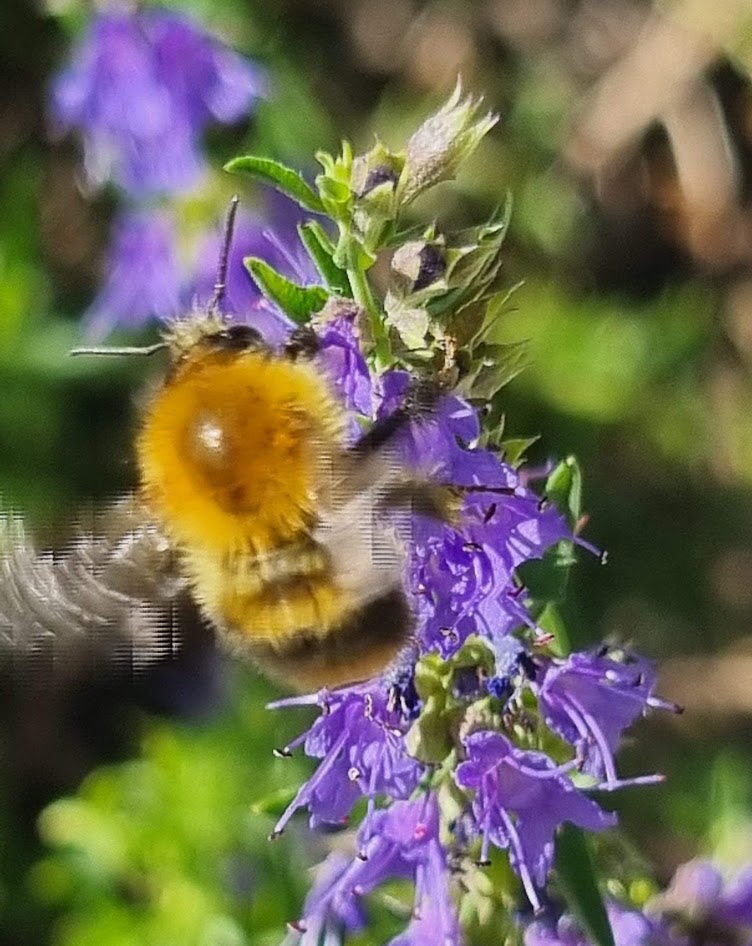
- Common carder bumblebees (10-13mm) pictured below on hyssop in late summer
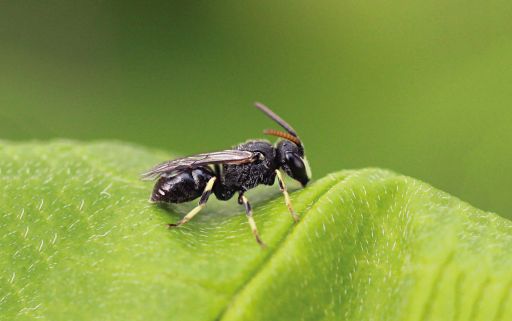
- Yellow-face bees (5-7mm) pictured below pollinates fennel in late summer
- Common Furrow bees (8mm) pollinates oregano in late summer
All photos by Penny Metal (except Common carder bee. A. Benjamin)
A scarce Brown-banded carder bumblebee was recorded foraging on lavender on Weil law firm’s herb garden on its 8th floor rooftop terrace in the City of London.
Solitary bees are important pollinators. Many are in decline. A key reason is habit loss and fragmentation. By growing herbs that flower sequentially we can feed wild bees, boost biodiversity, and use some for ourselves in the kitchen too.