How you maintain a green space is as important as its creation to provide habitat for wildlife
DO
- Allow trees and shrubs to flower. Neat hedges and sculptured trees deprive pollinators of food, and shelter for birds.
- Let ‘weeds’ grow – dandelions and alkanet provide essential food for pollinators in spring.
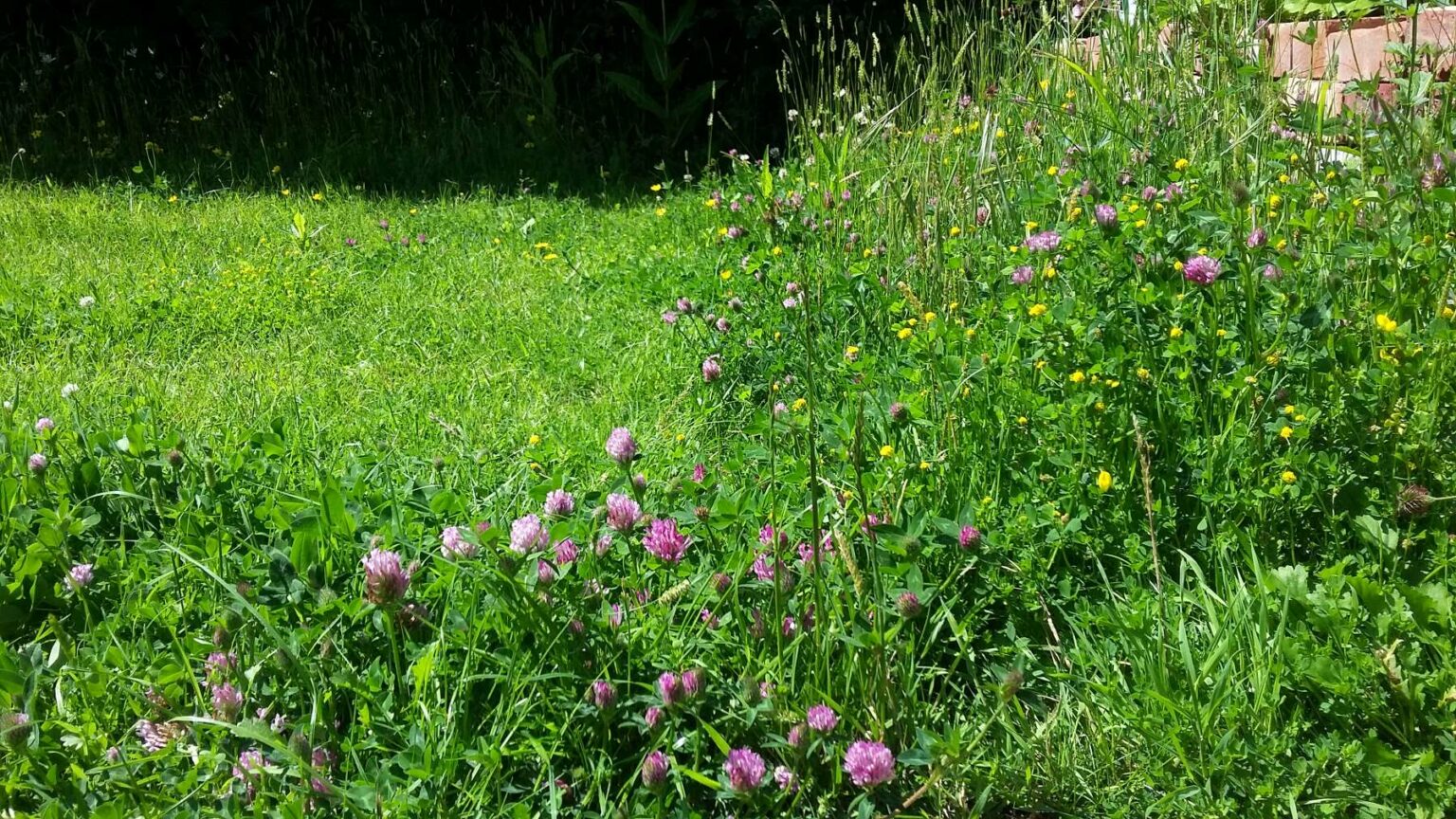
- Leave an area of long grass where some species of bees may nest and wildflowers can grow, like clovers (photo above courtesy of Mark Schofield at No Mow May).
- Water flowering plants. Even drought-tolerant plants retain nectar if they are thirsty, leaving little for pollinators. Without sufficient nectar and pollen, bees will struggle to feed their offspring. If you are going away, install a timed, drip hose irrigation system.
- Keep pebbles in a saucer topped up with water to give bees a drink.
- Pile up logs for beetles and other insects to nest.
- Pile up leaves in late summer for queen bumblebees to hunker down.
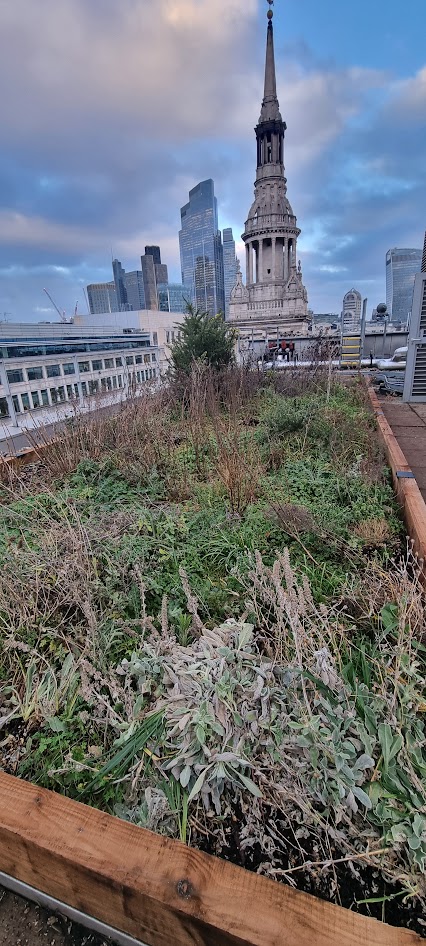
- Leave dead stems and leaf litter over winterwhere bees, butterfly and moth caterpillars, or chrysalises, and other insects, can nest or shelter.
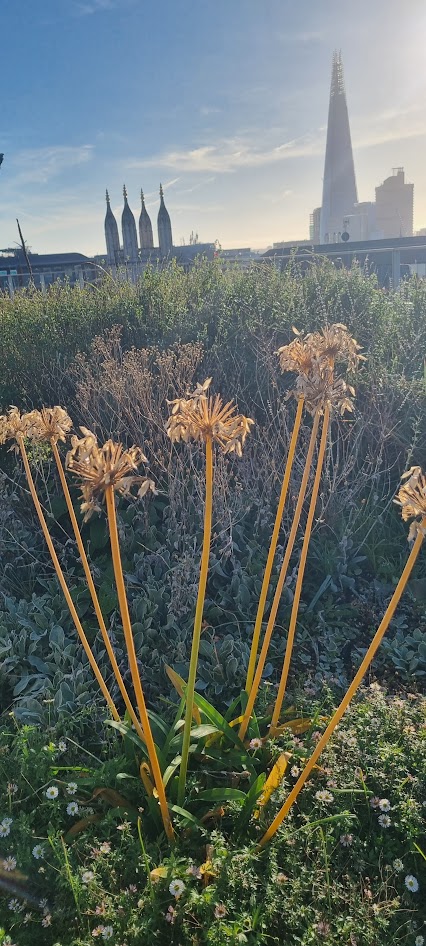
- Leave seed heads over winter to feed birds.
DON’T
- Use pesticides, weed killers or any kind of bug spray as they are toxic for pollinators.
- Cut all grass short, or trim, or cut back trees before they have flowered
- Pull up all weeds
- Dig soil – caterpillars and pupae may be sheltering.
- Tidy up in winter.