
What you need
- Flowers – any green space, from a park to a garden, allotment, or cemetary. Anywhere where there are plenty of different bee-friendly flowers or shrubs in bloom
- A dry, calm, warm day is best. It doesn’t have to be sunny, although that helps. If it’s over 27C, bumblebees may not forage, so best to do it early in the morning when it is cooler
- An hour to observe the bees
- A Bees to See in (whatever month you do the safari) guide – from the Buzz newsletter, Instagram alison_urbanbees or the Urban Bees website
- A pen to tick off the bees you see on the guide
- A smartphone to take photos of bees that you can try to identify on a App, such as iNaturalist or Seek
Optional extras
- A hand lens so you can get up close (if the bee sticks around that long!)
- Macro binoculars
- A net and small glass tube if you are confident about catching small insects without hurting them and putting them in a tube for identification (something I haven’t mastered)
- Field Guide to the Bees of Great Britain and Ireland – although it’s a hefty tome, so I leave it at home and cross reference any photos I’ve taken of bees I couldn’t identify in the field
- Bee Spotter’s Guide – an illustrated pocket book that may help you to identify a few bees.
Citizen Science
Do your ‘bee safari’ for Bumblebee Conservation Trust by becoming a Bee Walker and record bumblebees you see each month in the same area.
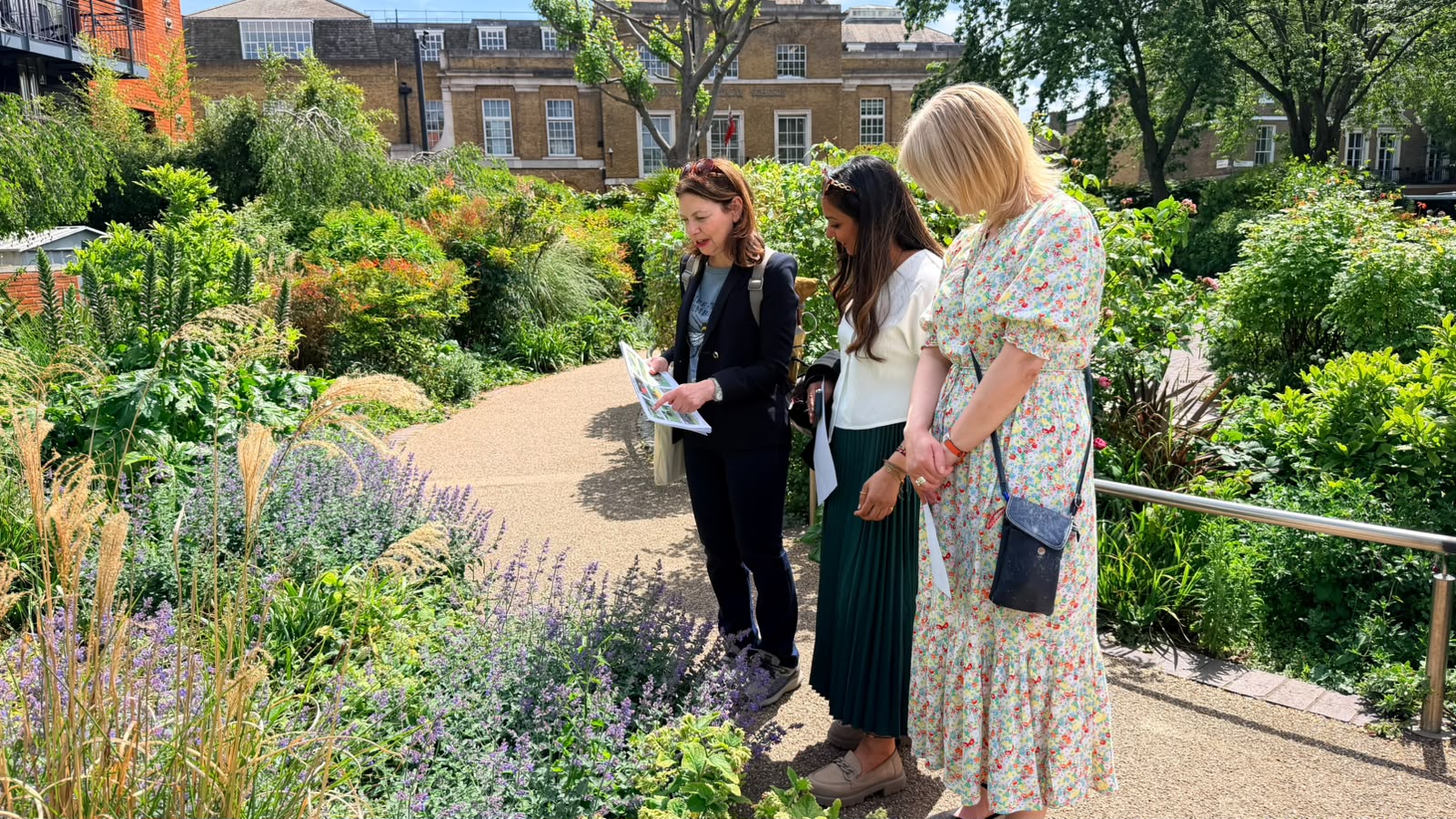
Urban Bees leads bee safaris for a number of clients’ staff including Boodle Hatfield (pictured above), Weil law firm, Price Waterhouse Coopers and the Friends’ of Regents Park.
To learn more about our bee safaris contact alison@urbanbees.co.uk